“The pros and cons of open shelving in modern kitchens come down to balancing style with practicality. Open shelves can create an airy, welcoming space while keeping everyday items within easy reach, but they also require regular cleaning and organization. For many homeowners, combining open shelving with traditional cabinets offers the perfect balance of beauty, storage, and everyday comfort.”
Open shelving has become a thoughtful and increasingly popular choice in modern kitchen design. Its clean lines, open display, and easy accessibility can make a kitchen feel brighter, larger, and more personal. At the same time, open shelves require careful organization and regular cleaning, which may not suit every household.
Whether you are planning a complete kitchen remodeling project or simply looking for a fresh way to update your storage, understanding the advantages and disadvantages of open shelving can help you make a confident decision. Below, we explore the key benefits, potential challenges, and practical considerations to determine whether open shelving belongs in your modern kitchen.
The Pros of Open Shelving
Open shelving can bring a beautiful sense of openness, warmth, and personality to a modern kitchen. By keeping everyday essentials within easy reach, it makes cooking and organizing feel more effortless while giving you the freedom to showcase your favorite dishes and décor. Here are some of the key benefits:
Easy Access to Everyday Items
One of the most noticeable benefits of open shelving is convenience. Plates, glasses, bowls, mugs, and frequently used cooking items can remain visible and easy to reach. Instead of opening several cabinet doors or searching through crowded cupboards, you can quickly see what you need. This accessibility can be especially helpful in busy kitchens where several people prepare meals throughout the day. When commonly used items have a dedicated place, everyday cooking can feel smoother and less frustrating.
Creates an Open and Airy Feel
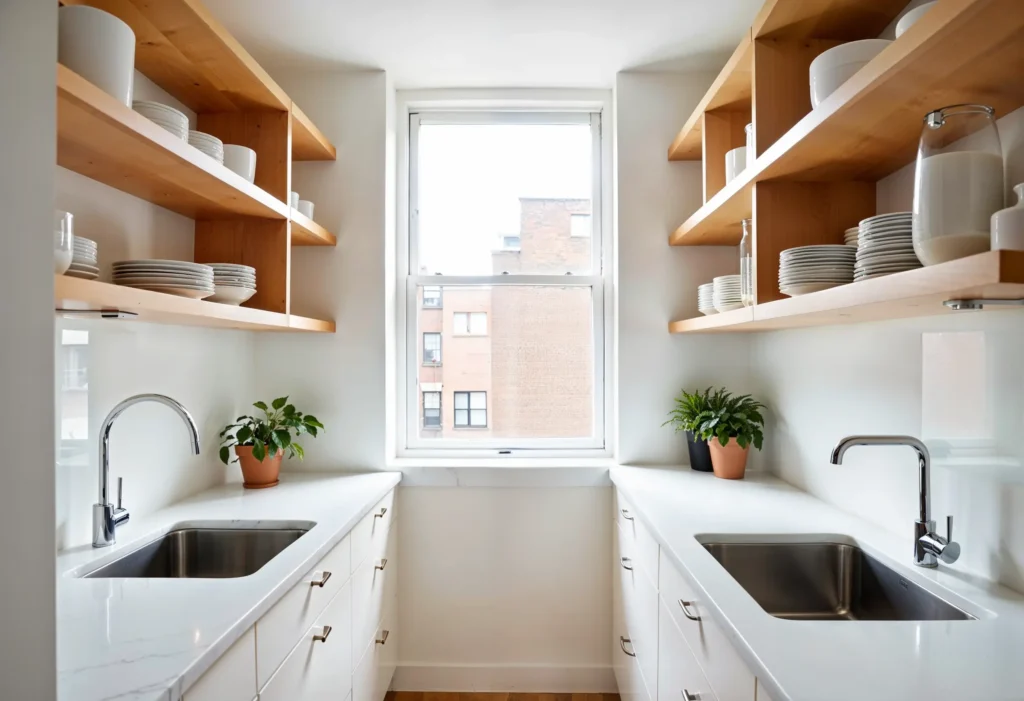
Modern kitchens often focus on creating an uncluttered and spacious atmosphere. Open shelves can contribute to this look by replacing some bulky upper cabinetry with a lighter visual element. Because the wall remains partially visible, the kitchen may feel more open, particularly when the shelves are paired with light colors, simple materials, or a well-planned kitchen backsplash. This can be useful in smaller kitchens where traditional upper cabinets may make the room feel enclosed.
Adds Personality and Visual Interest
Unlike closed cabinets, open shelving turns storage into part of the kitchen’s décor. Attractive dishes, glassware, cookbooks, plants, ceramics, and decorative accessories can become part of the overall design. Shelves can also introduce warmth and texture through materials such as natural wood, metal, glass, or stone. With thoughtful styling, they can complement your kitchen countertops and create a cohesive appearance throughout the room.
Flexible Design Options
Open shelving is available in many styles, sizes, and materials. You can choose floating shelves for a minimalist appearance, thick wood shelves for a warm and traditional feel, or metal shelving for a more industrial-inspired kitchen. The spacing can also be customized around the items you use most. This flexibility makes open shelving suitable for different kitchen design ideas, from contemporary spaces to transitional and farmhouse-inspired interiors.
Can Be Budget-Friendly
Open shelving may cost less than installing a full set of upper cabinets, depending on the materials, hardware, and installation requirements. A simple shelf system can provide useful storage without the expense or visual weight of extensive cabinetry. However, the final cost depends on the design, materials, wall structure, and installation. High-end wood, custom fabrication, decorative brackets, and professional installation can increase the overall investment.
The Cons of Open Shelving
While open shelving can make a kitchen feel stylish and inviting, it also comes with a few challenges. The very openness that creates its charm can require more care, organization, and cleaning. Before choosing this design, consider the following potential drawbacks:
Requires More Frequent Cleaning
One of the biggest concerns with open shelving is exposure. Unlike closed cabinets, shelves do not protect dishes and kitchen accessories from airborne dust, cooking residue, and grease.
Items placed near the stove may require additional cleaning, especially in kitchens where frying and heavy cooking are common. The shelves themselves also need regular attention to maintain their appearance. For homeowners who prefer low-maintenance storage, traditional cabinets may offer greater convenience.
Can Make a Kitchen Look Cluttered
Open shelving can look beautiful when it is carefully arranged, but too many items can quickly create visual clutter. Because everything remains visible, even everyday kitchen essentials become part of the room’s overall appearance.
This means organization becomes especially important. Using matching dishes, grouping similar items, and leaving some open space can help maintain a balanced look. Without thoughtful styling, the open concept can feel less relaxing rather than more spacious.
Offers Less Concealed Storage
Open shelves are excellent for displaying dishes and smaller kitchen essentials, but they may not replace all the storage provided by traditional cabinets.
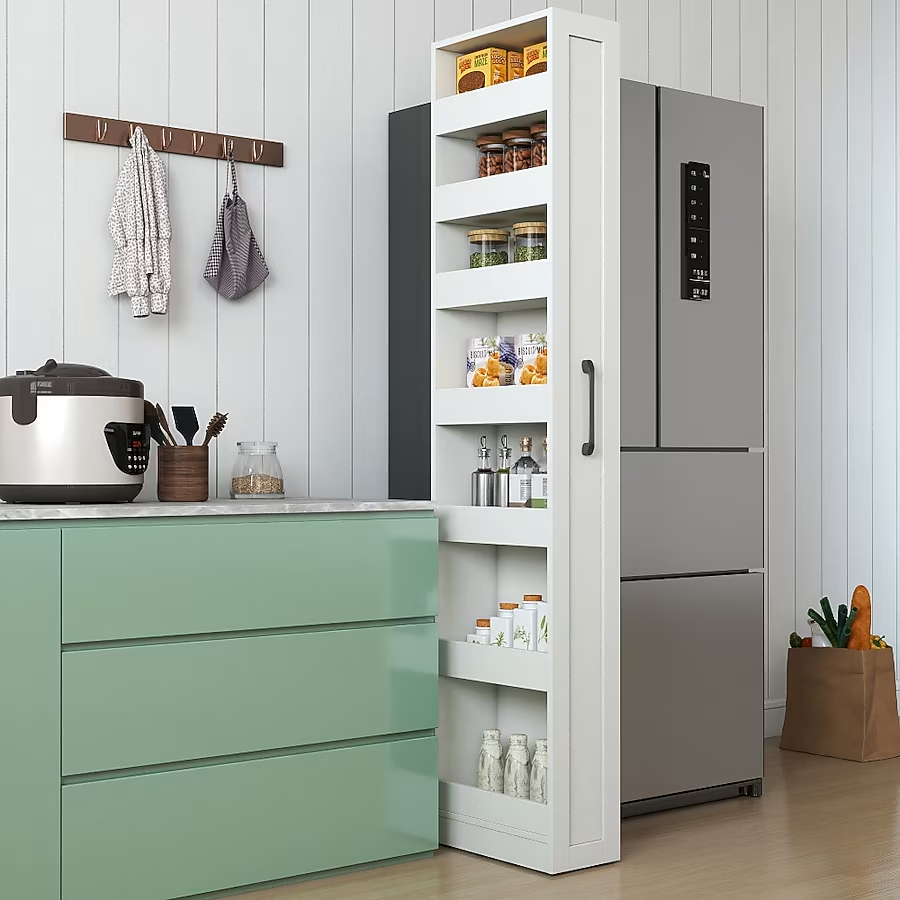
Large pots, pans, appliances, cleaning supplies, food packages, and less attractive household items often benefit from enclosed storage. This is why many homeowners choose a combination of open shelving and cabinets rather than relying entirely on shelves. A balanced kitchen storage solution can provide both accessibility and concealed organization.
Items Are More Exposed to Kitchen Conditions
Kitchen environments can be humid, warm, and busy. Items stored on open shelves are exposed to changes in temperature, moisture, cooking odors, and airborne particles. This does not necessarily make open shelving impractical, but it does require thoughtful placement. Shelves positioned directly beside or above cooking areas may need more maintenance than those installed farther away from the stove or sink.
Styling Can Become an Ongoing Task
Open shelving can make your kitchen feel personal, but it can also create pressure to keep everything looking presentable. When shelves are visible from the main living area, misplaced dishes or overflowing collections can stand out. For some homeowners, styling the shelves is an enjoyable creative process. For others, it can feel like another household responsibility. Your preferred lifestyle and organization habits should therefore play a role in the decision.
Open Shelving vs. Traditional Cabinets
Choosing between open shelving and traditional cabinetry is not simply a matter of appearance. Each option serves a different purpose. Open shelving emphasizes visibility, accessibility, and decoration. Traditional cabinets prioritize concealed storage, organization, and protection from dust. If you have plenty of attractive dishware and enjoy an open aesthetic, shelves may be appealing. If you have many kitchen appliances or prefer to keep everyday clutter out of sight, cabinets may be more practical.
You do not necessarily have to choose one over the other. Combining both can create a more functional modern kitchen layout. For example, cabinets can store bulky appliances and cookware while open shelves display frequently used dishes or decorative pieces.
How to Use Open Shelving Successfully
Open shelving can bring warmth, character, and a beautiful sense of openness to your kitchen, but thoughtful planning is the key to making it work. When shelves are carefully positioned and styled, they can feel effortless rather than overwhelming. Keep these practical tips in mind:
Choose the Right Location
Placement can make a major difference. Open shelves work well in areas where you want quick access or visual interest. Consider placing them away from direct cooking splatter whenever possible. Think about how the shelves will interact with your kitchen cabinet design, countertops, lighting, and backsplash before installation.
Avoid Overcrowding
A shelf does not need to be full to be useful. Leaving intentional space can make the kitchen feel calmer and more sophisticated. Group similar objects together and vary heights and textures without adding too many decorative pieces. A simple arrangement is often easier to maintain and more visually appealing.
Consider Durability and Weight
The material and mounting system should be appropriate for the items you plan to store. Heavy cookware requires stronger support than lightweight cups or decorative accessories. Proper installation is particularly important because shelves must safely support their intended load. When planning a renovation, discuss the expected use and wall structure before selecting a shelving system.
Combine Open and Closed Storage
For many kitchens, a combination approach offers the best balance. Use open shelving for items you enjoy displaying and closed cabinets for things you would rather keep hidden. This strategy can also make a kitchen renovation more practical by allowing you to create visual interest without sacrificing valuable storage capacity.
Is Open Shelving Right for Your Modern Kitchen?
Open shelving can be a beautiful addition to a modern kitchen, but it is not automatically the right solution for everyone. Its advantages include easy access, visual openness, design flexibility, and opportunities for personal expression. Its drawbacks include more cleaning, visible clutter, limited concealed storage, and the need for thoughtful organization.
Before making a decision, consider how you actually use your kitchen. If you enjoy an organized display and do not mind regular cleaning, open shelves could add warmth and character to the space. If convenience means keeping most items hidden and protected, traditional cabinetry may be a better fit. A carefully planned combination of shelves and cabinets can also give you the best of both worlds.
Final Thought
The most successful kitchen design is not simply the one that looks beautiful in a photograph. It is the one that feels comfortable, works naturally with your daily routine, and continues to serve your needs over time. Open shelving can bring a sense of openness and personality to a modern kitchen, but its beauty comes with responsibility. By balancing display space with practical storage and choosing placement carefully, you can create a kitchen that feels both stylish and genuinely livable.
Frequently Asked Questions
Q1. Is open shelving a good idea for a modern kitchen?
A: Yes, open shelving can work well in modern kitchens when it is thoughtfully designed. It can make the space feel open, provide easy access to frequently used items, and add decorative character. However, it requires more organization and cleaning than enclosed cabinetry.
Q2. Are open shelves difficult to keep clean?
A: They can require more frequent cleaning because dishes and shelves are exposed to dust, grease, and kitchen air. Shelves located close to the stove may need additional maintenance.
Q3. Can open shelving replace kitchen cabinets?
A: Open shelving can replace some upper cabinets, but it may not provide enough concealed storage for every kitchen. Combining shelves with cabinets is often a practical way to balance accessibility and storage.
Q4. What should be stored on open kitchen shelves?
A: Frequently used dishes, mugs, glasses, bowls, cookbooks, attractive serving pieces, and decorative accessories are good choices. Bulky appliances, cleaning products, and items that are rarely used may be better stored in closed cabinets.
Q5. Does open shelving make a small kitchen look bigger?
A: Open shelving can make a small kitchen feel lighter and less visually crowded by leaving more of the wall exposed. The result depends on the shelf design, color, spacing, and overall organization.
Q6. What materials work best for open kitchen shelves?
A: Wood, metal, glass, and stone can all work well depending on the kitchen’s design. The material should complement the existing countertop installation, cabinetry, backsplash, and overall style while providing sufficient strength for the intended use.