
“Transform your basement into a comfortable and welcoming guest suite with thoughtful planning and practical design. Focus on a functional layout, a comfortable sleeping area, proper lighting, smart storage, privacy, and suitable flooring. Adding a bathroom, flexible furniture, and guest-friendly details can make the space even more convenient. With the right choices, an unused basement can become a cozy retreat for family and visitors.”
A basement can be much more than a place for storage boxes, seasonal decorations, or forgotten furniture. With thoughtful planning, even a dark or underused basement can become a warm, comfortable guest suite that feels like a private retreat. The key is to balance comfort, functionality, privacy, and practical design.
Designing a basement guest suite does not necessarily mean making major structural changes or choosing expensive finishes. A carefully planned layout, welcoming lighting, comfortable furniture, and smart storage can completely change how the space feels. Whether you are preparing for visiting family or creating a flexible room for overnight guests, these ideas can help you make the most of your basement.
Start With a Functional Layout
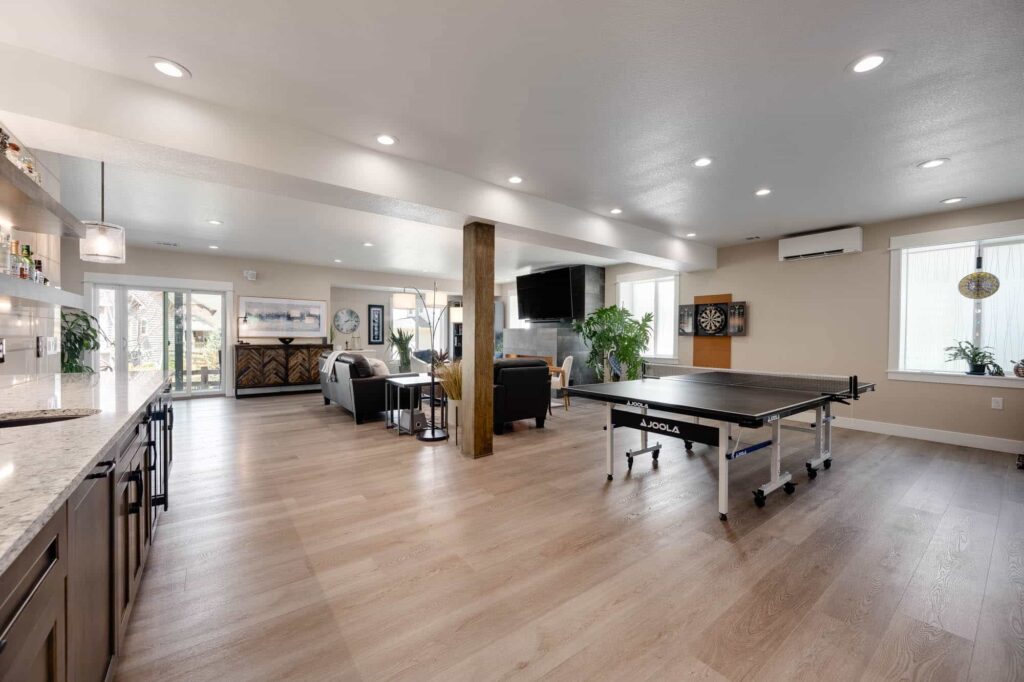
Before choosing furniture, think about how guests will move through the space. A good layout should provide clear pathways between the sleeping area, bathroom, storage, and entrance without making the room feel crowded.
If the basement is large enough, consider dividing it into simple zones. A sleeping area can occupy one side of the room, while a small sitting or work area can use another corner. This approach creates a sense of purpose without requiring unnecessary walls.
Create a Comfortable Sleeping Area
The bed should be the heart of the guest suite. Choose a comfortable mattress and position the bed where guests can easily access both sides. If space allows, bedside tables with reading lamps can make the room feel more like a thoughtfully designed bedroom.
Soft bedding, layered blankets, and a few pillows can add warmth without overwhelming the room. Neutral colors can create a peaceful foundation, while carefully chosen accents can introduce personality.
Add a Small Sitting Area
A guest suite can feel considerably more inviting when it offers somewhere to sit besides the bed. Depending on the available space, this could be a comfortable chair, a small bench, or a compact loveseat.
A sitting area also gives guests a place to read, relax, have a conversation, or enjoy a quiet moment alone. Even a simple arrangement can make the basement feel more like a private retreat than an extra bedroom.
Make the Basement Feel Bright and Welcoming
Basements often receive less natural light than upper-level rooms, so lighting deserves special attention. Instead of relying on one overhead fixture, create layers of light throughout the room.
Use Multiple Lighting Sources
Combine ceiling lighting with bedside lamps, floor lamps, wall sconces, or accent lighting. Different sources allow guests to adjust the atmosphere depending on what they are doing. Warm, comfortable lighting can also help soften the colder feeling that some basements may have. The goal is to create a space that feels calm and inviting at every hour of the day.
Use Light Colors Strategically
Light walls, soft textiles, and reflective surfaces can help make a basement feel more open. You do not have to make everything white. Warm neutrals, soft beige, muted gray, and gentle earthy shades can provide brightness while maintaining character. Mirrors can also help reflect available light and create the impression of additional space, particularly when positioned near windows or light sources.
Choose Basement-Friendly Flooring
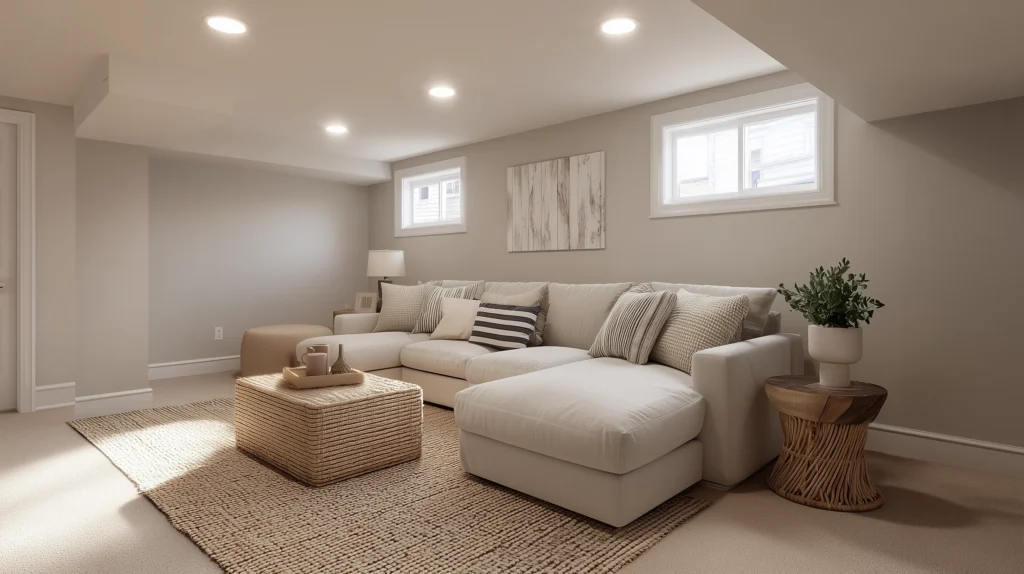
Flooring plays an important role in both comfort and practicality. Because basements can be more vulnerable to moisture than upper floors, the flooring should be selected with the environment in mind. Water-resistant or moisture-tolerant flooring can offer peace of mind while also providing a comfortable foundation for the guest suite. Area rugs can add softness and warmth, especially around the bed and sitting area.
Balance Comfort and Durability
A guest room should feel cozy, but the materials also need to withstand regular use. Choose flooring and finishes that are easy to clean and maintain. This balance becomes particularly important if the basement will serve multiple purposes throughout the year. Durable finishes allow the space to remain attractive without requiring constant upkeep.
Plan for Privacy
Privacy can make a basement guest suite feel significantly more comfortable. If the guest room shares space with a family room, laundry area, or storage zone, consider how to create visual separation. Curtains, room dividers, partial walls, or strategically positioned furniture can provide privacy without making the basement feel enclosed. If the suite includes its own entrance or bathroom, make sure guests can access these areas comfortably without disturbing the rest of the household.
Add a Private or Convenient Bathroom
If your basement layout allows for a bathroom, it can make the guest suite much more functional. Guests appreciate having convenient access to a bathroom without needing to travel upstairs during the night.
The bathroom does not have to be oversized. A well-planned compact bathroom can include the essentials while maintaining a comfortable and attractive appearance. When planning a basement bathroom, consider storage, ventilation, lighting, flooring, and easy-to-clean surfaces. These practical details can make a meaningful difference in the guest experience.
Include Smart Storage
Guests need somewhere to put their belongings, even if they are only staying for a few nights. A guest suite should provide enough storage to prevent luggage and clothing from taking over the room. A wardrobe, dresser, built-in shelves, or a small closet can provide useful space. If the basement already has built-in storage, make the most of it by keeping the area organized and accessible.
Keep Essentials Within Reach
Consider leaving space for luggage, hanging clothes, shoes, and personal items. A few hooks near the entrance can also provide a convenient place for coats, bags, or towels. Small details such as these may seem simple, but they can make guests feel genuinely considered and comfortable.
Create a Comfortable Temperature
Temperature can have a major effect on how welcoming a basement feels. Because below-ground rooms can sometimes feel cooler, make sure the space has an appropriate heating and cooling solution. Soft rugs, layered bedding, and comfortable textiles can provide additional warmth, but they should complement rather than replace proper climate control. Good ventilation is equally important. A comfortable guest suite should feel fresh and pleasant rather than damp or stuffy.
Add Thoughtful Guest-Friendly Details
The most memorable guest rooms are often not the most expensive ones. They are the rooms where small details make visitors feel cared for. Consider providing fresh towels, extra blankets, a bedside charging area, a mirror, basic toiletries, and a small place for guests to keep personal belongings. A water carafe or a few reading materials can also add a welcoming touch.
Keep Décor Personal but Versatile
The room should have character without becoming overly specific. Simple artwork, plants, textured fabrics, and a few decorative accessories can create personality while keeping the space comfortable for different guests. Avoid filling every surface. A little breathing room can make the basement feel calmer and easier to maintain.
Make Safety Part of the Design
A functional guest suite should also be easy to navigate. Clear pathways, adequate lighting, secure railings, and accessible entrances can make the space safer and more comfortable. Pay particular attention to stairs and transitions between rooms. Night lighting can be especially helpful for guests who may be unfamiliar with the basement layout. Before completing a basement renovation, check applicable local requirements for bedrooms, windows, exits, electrical work, plumbing, and other construction elements. Requirements can vary depending on the property and location.
Make the Space Multi-Functional
A basement guest suite does not have to remain a guest room all year. If overnight visitors are occasional, design the room so it can serve another purpose when no one is staying.
A desk can create a home office area, while a comfortable chair can support reading or relaxation. Flexible furniture can allow the room to transition between guest accommodation and everyday use without sacrificing comfort. This approach can help you get more value from your basement while keeping the guest suite ready whenever visitors arrive.
Is a Basement Guest Suite Worth It?
A well-designed basement guest suite can transform an overlooked part of the home into a space filled with comfort and purpose. With the right layout, lighting, flooring, storage, privacy, and finishing touches, a basement can feel surprisingly warm and inviting.
The most important thing is to design around real needs rather than simply trying to make the room look impressive. Think about how guests will sleep, move, store their belongings, use the bathroom, and relax. When functionality leads the design, the beauty tends to follow naturally.
Final Thought
A basement does not have to feel dark, forgotten, or disconnected from the rest of the home. With thoughtful choices, it can become a peaceful guest retreat where visitors feel comfortable from the moment they arrive.
The most meaningful design is not always about adding more. It is about creating a space where every detail has a purpose, from the placement of the bed to the warmth of the lighting and the convenience of storage. When those details come together, an ordinary basement can become a welcoming part of your home that guests will remember fondly.
Frequently Asked Questions
Q1. How can I make a basement guest room feel less dark?
A: Use layered lighting, lighter wall colors, mirrors, and reflective finishes to make the space feel brighter. If natural light is available, keep windows unobstructed and use lightweight window treatments.
Q2. What flooring is best for a basement guest suite?
A: Choose flooring that is appropriate for basement conditions and can handle potential moisture. Water-resistant options can be practical, while area rugs can add warmth and softness.
Q3. What should every basement guest suite include?
A: At minimum, provide a comfortable bed, adequate lighting, storage, privacy, temperature control, and easy access to essential amenities. Extra towels, blankets, charging points, and a place for luggage can make the stay even more comfortable.
Q4. Can a basement guest suite include a bathroom?
A: Yes, a basement guest suite can include a bathroom when the layout, plumbing, construction requirements, and local regulations allow it. A compact bathroom can provide significant convenience for overnight guests.
Q5. How do I make a small basement guest suite feel bigger?
A: Choose appropriately scaled furniture, keep pathways clear, use light colors, incorporate mirrors, and avoid excessive décor. Multi-functional furniture can also help maximize limited space.
Q6. Can a basement guest room also be used as a home office?
A: Absolutely. A flexible layout can allow the room to function as both a guest suite and home office. A compact desk, comfortable chair, and adaptable furniture can help the space serve both purposes.